Showing posts with label Campbell Center. Show all posts

Sunday, January 8, 2012

Campbell Center - rug repair


A bit of updating on processes that we covered back in Sept 2011 in the Care of Textile Collections program. In addition to wet cleaning, underlayment repairs and learning a variety of stitches and their application, I did a bit of rug repair.

Our instructor, Harold Mailand worked through the techniques with me. Then I went to work on the red and pink piece below.


The warp in this 80+ year old Dhurrie rug is jute - the weft is wool. The outside edges are starting to breakdown since jute is a fairly short lived fibre. It should be said that I did not attempt a perfect reweaving of the weft, but rather a stabilization to prevent further degradation.
 
 The first type of repair was a simple patch on the back, with stitching to hold the unraveled yarns in place. It would be used in the case of preparing a piece for exhibit, where too much intervention might be harmful to the piece.


The second repair, which I used in several places on rug, is a reweaving to reenforce the edges. Since this rug is in regular use - not an exhibit piece - it has to be strong and usable on both sides.


This is a picture of the first finished repair. As I went along the weaving got better each time - tighter and less visible.


Monday, October 3, 2011

The Campbell Center - Care of Textile Collections... continued


Stabilizing and repairing damaged textiles was part of the program focus.
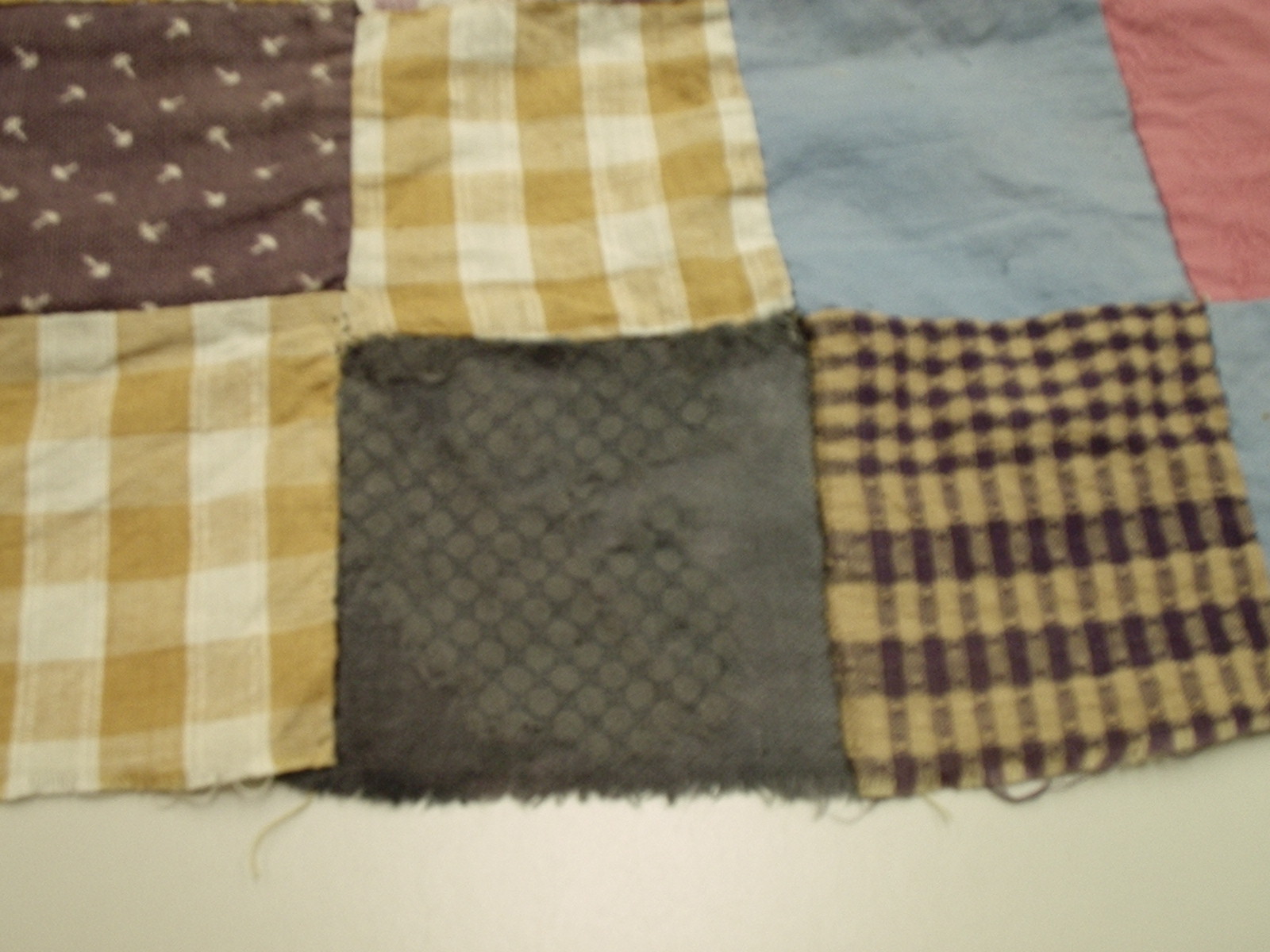
This quilt top is one I found at an antique shop in Wisconsin. After some fibre identification under the microscope, we discovered that the degraded fabric was wool. Probably a combination an aged fabric and some too vigorous washing with an alkaline detergent caused the damage. All the rest of the squares were cotton and were in fine shape.


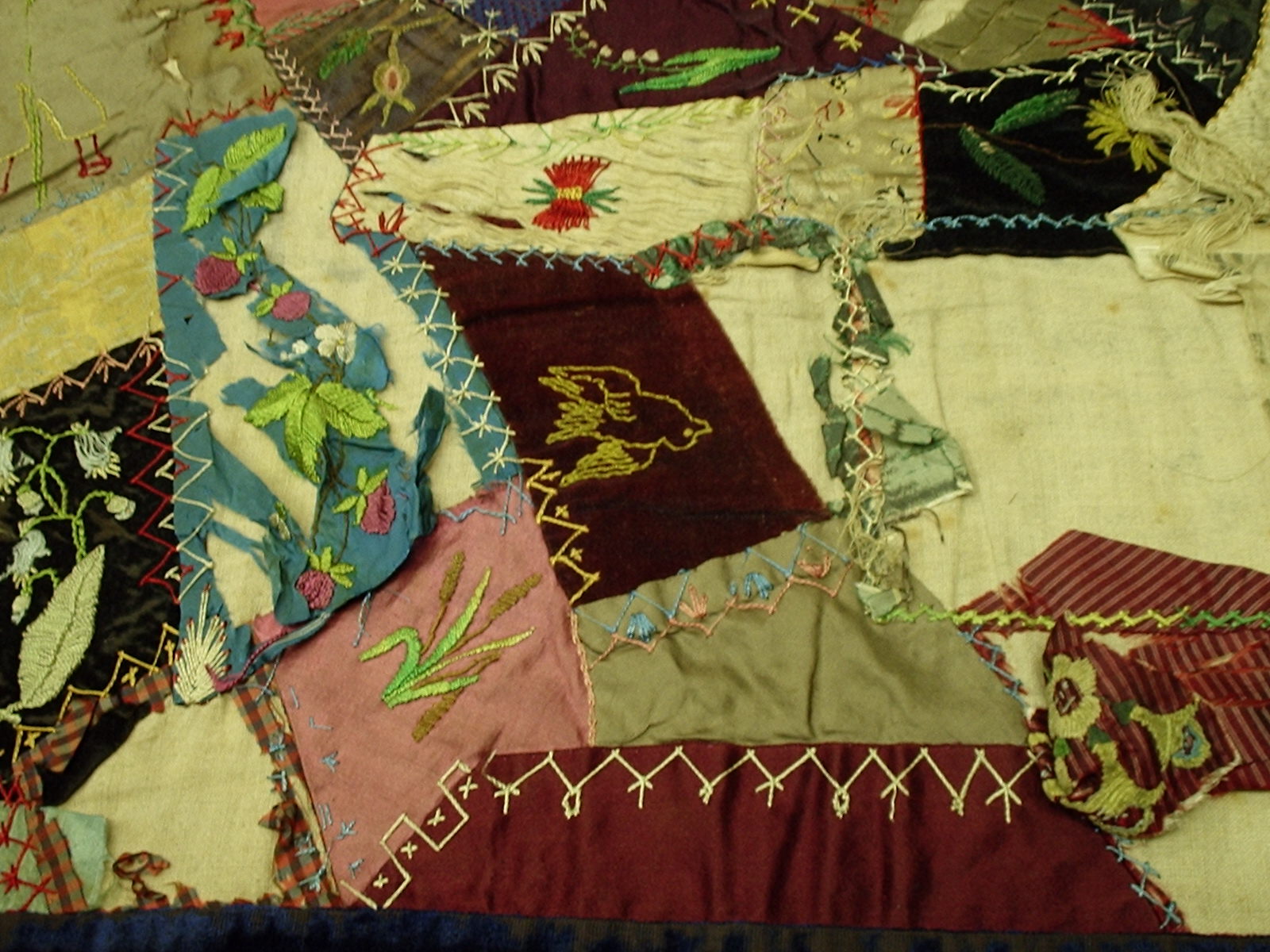
This crazy quilt is made from weighted silk - very common in the 1800s. Silk was sold by the lb. and in order to make it weigh more it was treated with metallic salts. Unfortunately overtime it damages the fibres.


Using the 9-patch quilt top for an exercise,  the damaged wool was backed with an underlayment of  a square of  closely matching hand-dyed cotton - a pure coincidence that I had this with me. Then a overlayment of a sheer grey netting was stitched on top. This sandwich stabilizes and holds the damaged piece in place.


This is the finished repair. It's the kind of repair that would be used on a precious or significant textile where it is important to salvage and maintain as much of it as possible.

Since this quilt top has no special significance (other than I like it and think it's charming) and was only used as a training piece,  the rest of the damaged pieces were removed and will be replaced with new cotton squares - an equally valid repair for this type of textile.


Tuesday, September 13, 2011

Laundry Day at the Campbell Center

Today we were wet cleaning and repairing a variety of textiles -  learning supportive ways of handling textiles, which are most fragile when the are wet.

One of the students with Harold Mailand, our instructor, wet cleaning a woven and embroidered cotton bag  from India..

I had recently purchased these cotton textiles - star patterned cushion cover and a package of 24 vintage crazy quilt squares - at a little antique shop in northern Wisconsin. they were musty and had yellow and tan spotting on them.


After washing in Orvus paste - a very gentle detergent - these piece were put outside  at mid-day to "solar bleach". In only an hour there were already changes; in two they were quite beautiful - bright and stain free. As soon as the whites were clear, the pieces came out of the sun so that the colours wouldn't fade. 


Voila!

Saturday, September 10, 2011

Session 1 at the Campbell Centre


The last 4 days studying Care of Textile Collections at the  Campbell Center for Historic Preservation have been fantastic.  The campus is beautiful with buildings surround a central "quad".  Over 60 varieties of trees give it a calm and meditate air - a lovely place to walk during breaks.


 Our instructor, Harold Mailand, has guided the class through an overview of fibre identification, fabric types, cleaning and stabilization. Intense and informative.
 
 This is an image of a sampler of conservation stitches we might use. Looks simple - yes - but each has it's own specific application.